Meta is removing placement exclusions. Here's our problem with that.
Insights
·
September 8, 2026
·
by
Nigel Carboon
Meta announced this week that it's pulling manual placement exclusions out of Ads Manager. Right now you can switch off individual placements, Audience Network, Facebook search results, in-stream Reels, whatever's dragging performance down, or exclude a platform entirely. Once this rolls out, that lever's gone. The system decides where your ad runs across Facebook, Instagram, Audience Network and Messenger, and the only control left is bidding: pay more to nudge your ad appearing more in the placements you actually want.
No firm date yet, Meta's calling it "soon" and drip-feeding warnings into Ads Manager. We went through every live Meta account we run this week. None of them have it yet. If yours still shows exclusions, that's Meta's rollout schedule, not you missing a setting.
Meta's pitch is the same one it's given for every automation push over the past two years: its system sees more data than any human buyer does, so let it find the placements actually converting instead of an advertiser guessing and switching things off out of habit. Some exclusions are just old habits nobody's revisited since 2021.
But we'd ask why the lever disappears entirely rather than just defaulting to "on." A system that's confident in its own placement decisions shouldn't need to remove your ability to overrule it, it should just rarely get overruled. Taking away the off switch reads less like "trust the algorithm" and more like Meta wanting inventory filled on placements advertisers have spent years learning to avoid, especially ones with a lower cost per impression and a lot less to answer for.
We've seen this pattern before. On a recent account, session-level GA4 data showed most placements were landing genuine engagement, real people spending a couple of seconds or more actually looking at the page. But a slice of sessions clocked exactly zero seconds of engagement time, despite firing page_view, first_visit and session_start in the same instant, the kind of event pattern you get from a bot or an auto-bouncer, not an actual person. Audience Network was the common thread.
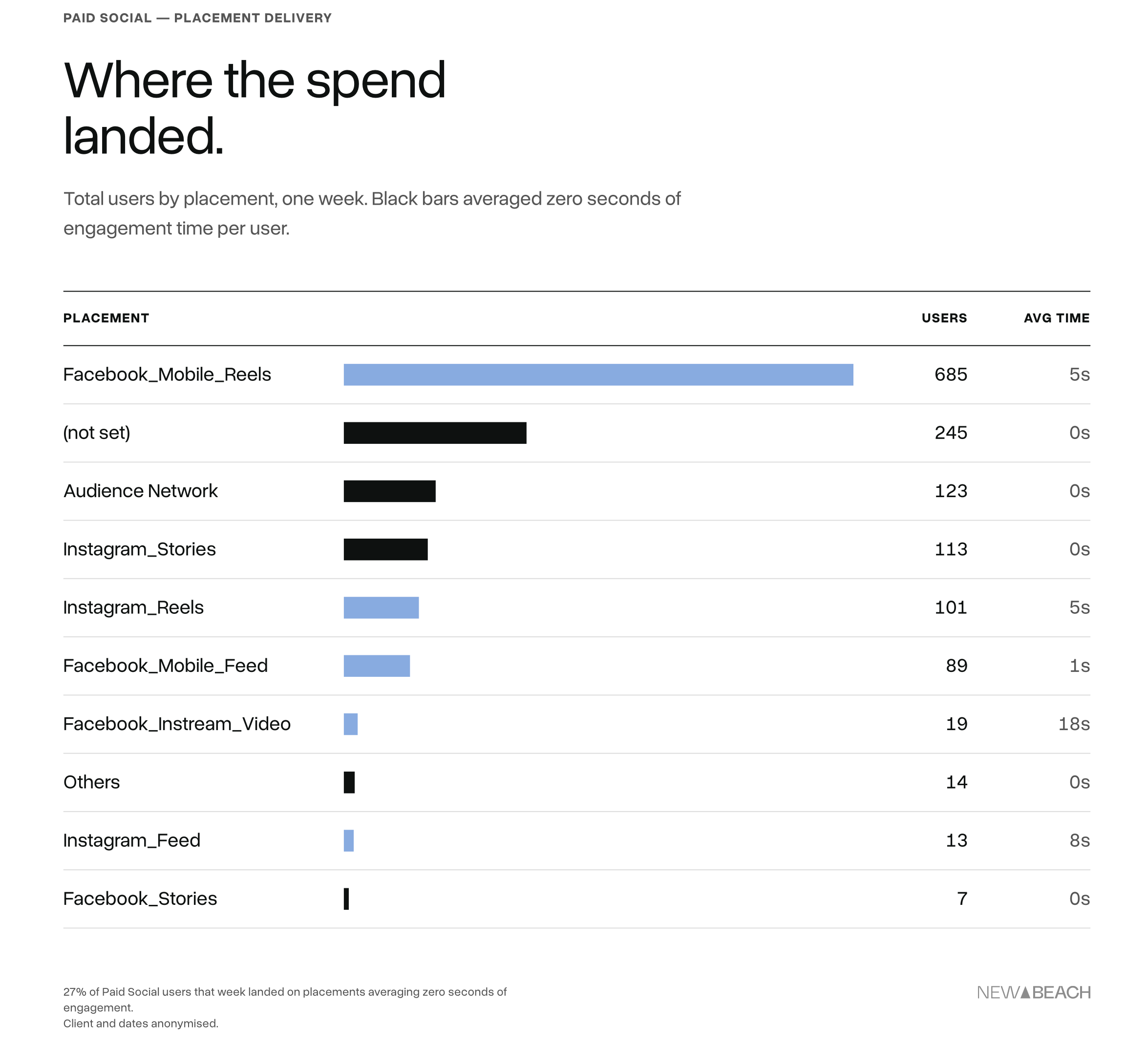
Excluding it wasn't even straightforward, one ad set had placement-level creative customisation switched on for some ads, which blocked the exclusion from taking effect until that got sorted first. Once it did, and Audience Network was fully excluded, time on site went up. Not marginally. The spend didn't change, the creative didn't change, the audience didn't change. The only thing that changed was where Meta was allowed to show the ad.
That's the exact lever this update removes.
So what do you actually do about it. Don't panic before it's live, if exclusions are still sitting in your ad sets, keep using them and keep an eye on placement breakdowns while you still can. Once the update lands, treat bidding as your new placement lever, not just a spend control, influence underperforming placements through bid adjustments and budget allocation rather than a hard exclude. Lean harder on placement-level reporting in Ads Manager and GA4, because the visibility isn't going anywhere even if the control is. And check whether placement-level creative customisation is already fighting your own exclusions, as it did on the account above, that's worth untangling now, before the exclude option disappears and makes the question moot anyway.
We'll be watching this closely as it rolls out across our accounts, and we'll update this once we've seen the actual UI change and tested how much control the new bidding levers really give us.
Insights
·
September 8, 2026
·
by
Nigel Carboon